Katrina Aftermath
I glanced past the shrine near the front door, looked through the window frame, and turned away as if I'd seen an animal shot in the head. My friend wept instantaneously. At that moment I realized how important photographing these images would be.
December 2005. I flew from the Bay Area to New Orleans—my home state—four months after Hurricane Katrina. The flooding that killed 1,392 people and destroyed 80% of the city was caused by engineering failures in the levee system, not the storm itself. Federal courts later ruled the Army Corps of Engineers couldn't be held liable.
I felt voyeuristic walking through these destroyed communities. I'd compose a shot, take it, return to my rental car, drive back to comfortable accommodations. The people who'd lived here no longer had that luxury. Some no longer had life.
But I needed to see this. I needed to capture it—not for art, but for witness. To remind anyone who would listen that Katrina's aftermath remains a stain on our nation.
These images became a photobook and museum print series to raise funds for Instruments A Comin', a nonprofit supporting New Orleans musicians. If you're interested in acquiring a print, I'll donate a percentage to your chosen New Orleans arts charity.
This community—our muddy jewel, the birthplace of Jazz—still needs our help. Visit. Listen to the music. Eat the food. Give something back. They'd do the same for you.
December 2005
Photobook

Katrina Aftermath
Hope, Longing and Prayer
On December 10, 2005, while sitting in my unremarkable work cubicle, I found myself absorbed in the latest news about Katrina. The images and stories of devastation struck a chord deep within me. In that moment, I knew I couldn’t just observe from a distance—I had to see it for myself. Without hesitation, I put everything on hold and set out on a journey with my childhood best friend to witness the aftermath firsthand.
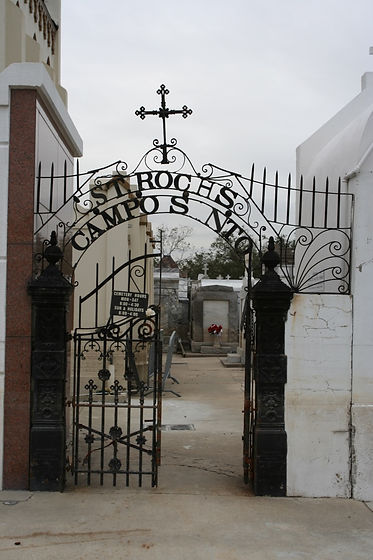
St. Roch's Cemetery
Patron Saint of the sick and the invalid
St. Roch's Cemetery was initially established in 1874 by Rev. Peter Leonard Thevis (1837-1893), pastor of Holy Trinity Church to serve his predominately German congregation.

Katrina Watermark
branded by nature
After spending only a few hours immersed in the aftermath of Katrina, I couldn’t help but notice the haunting watermark that lingered everywhere. This series of images offers an abstract lens on the harrowing reality that followed Hurricane Katrina’s destruction.

Resiliance
"Let me off in New Orleans"
The people and communities surrounding New Orleans understand hurricane season, yet they remain in the bowl and ride out the storm. The resilience and creativity of this community inspire all who visit.
Gallery Examples


Watermark #1
30x40 on Masonite
Watermark #1
30x40 on Masonite
Watermark #3
30x40 on Masonite